Asia Facilitators Conference, Malaysia, November 4, 2000
Organizational Transformation: The Methods of Self-Directed Change
facilitated by
Mark Pixley, The Institute of Cultural Affairs
|
“Change is the business environment. Change has overtaken every company. Creating change, managing it, mastering it, and surviving it is the agenda for everyone in business to make a difference.” Fast Company |
|
Discussion Process |
Workshop Method |
LENS – Leadership Effectiveness and New Strategy |
Self Directed Organizational Change |
|
Objective Reflective Interpetive Decisional
|
Context Brainstorm Organize Name Reflect
|
Practical Vision Underlying Contradiction Strategic Action Taskforce Implementation Systematic Follow-up
|
Future Search Open Space Appreciative Inquiry
|
What is blocking my organization from changing? (Partial List) |
||
Lack of honesty and open dialogue on perceived problems company is facing |
People are too busy ‘doing” things and not thinking about ‘doing things better’ |
Traditional mindsets in doing business |
Too many initiatives at one time but very poor and inconsistent in implementation |
Disenabling thinking and habits are too ingrained in the people |
Negative perception of staff from accepting the new change (that will bring good to the organization) |
We are not aligned in though and action at the strategic level |
“If it isn’t broken, don’t fix it” mindset and perception of people riding on previous success |
Our exco members are not putting their best foot forward |
We are taking on too many initiatives |
“Silo” culture |
Absence of concerted effort to plan a marketing strategy |
General membership of the club stick to old and outdated values/tradition that it is only for males |
The inability to communicate and reach understanding of the direction of the company |
Drive towards and desire to claim fame individually and not wanting to allow others to appear more in control |
How can I deal with the blockage and allow transformation of my organization? |
|||||
|
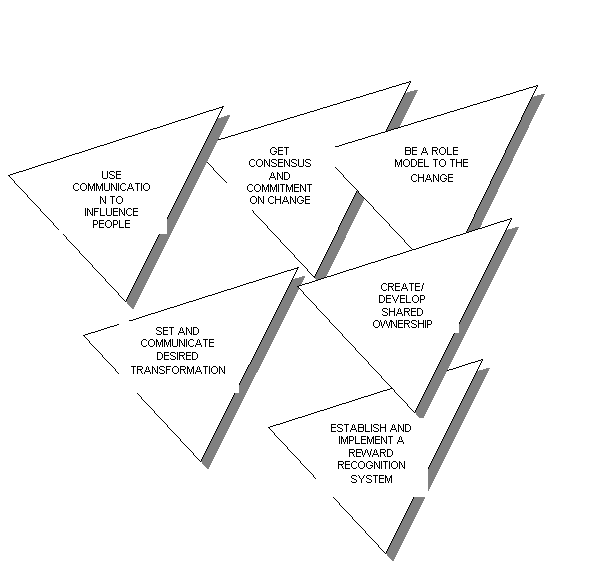
Establish and implement a reward and recognition system |
Create/develop shared ownership |
Set and communicate desired transformation |
Use communication to influence people |
Be a role model to the change |
Get concensus and commitment on the change |
|
Build consequence into the appraisal system |
Start talking to people individually |
Set aggressive targets |
Influence key people first |
Demonstrate model behavior with alignment |
Get the buy-in from the staff |
|
Establish reward and recognition for achievers |
Establish shared value |
Focus on desired transformation |
Lobby and support and convene assembly |
Set a good example “model” |
Create critical mass of change believers |
|
Introduce rewards and penalty system |
Create picture that all change efforts are integrated |
Communicate a positive picture of the change |
Recruit opposers as change agents |
Close competency gap of HR people through learning interventions |
Create win-win situation |
|
Be transparent on the benefit of change |
Brainstorm for innovative ideas |
Make loud noises and the job will get done |
Move on to a new organization |
Get buy-in from the top managers |
|
|
Communicate conflicting viewpoints |
Set time for dialogue |
Create open forums |
|||
|
Staff awareness on the technological change in the current environment |
|||||